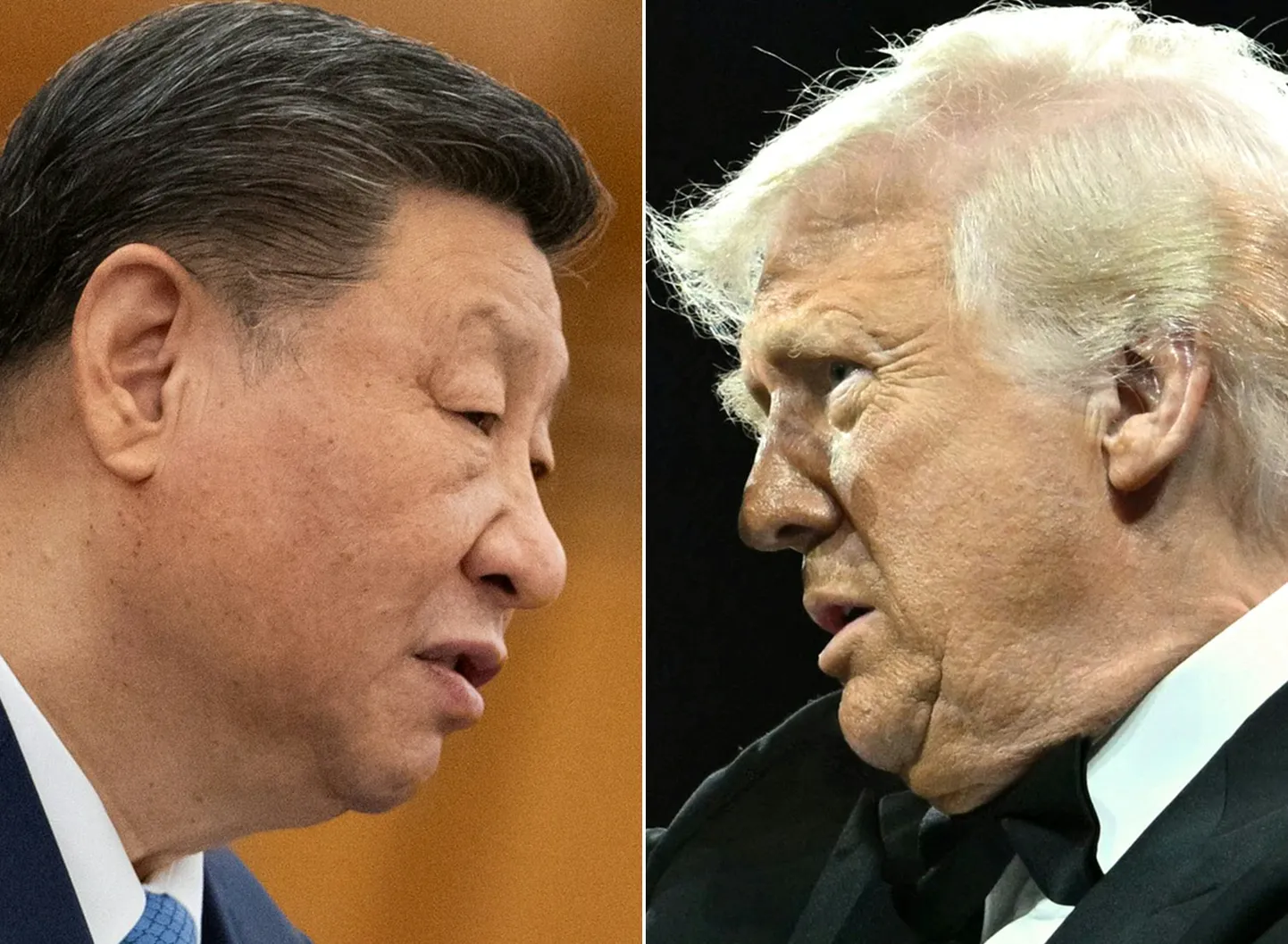
What US relations with China could look like – Ambassador Clyde Kull analyses the different scenarios in Postimees.
After Donald Trump’s victory in the 2024 elections, many experts expected him to focus his foreign policy on the Indo-Pacific region. The aim seemed clear: to focus resources so far devoted to Europe and Ukraine on dealing with the US’s biggest long-term rival, China. The Pentagon’s first steps, and the recent attempt to isolate China with tariffs, suggest that this is what is happening.
But there is one big missing piece: Trump has not made clear what he wants US relations with China to look like? Does he want a stable peace, a new Cold War, or a grand bargain where both sides can declare victory? Nobody knows. Nor, it seems, does Trump himself.
To be fair, former President Biden’s team also had difficulty in defining a clear objective for its China strategy. Their approach rested on three pillars: invest, align, compete – invest in America’s competitiveness, align with allies and compete with China. These steps were accompanied by success, but without a clear vision of the finish line, the strategy never seemed fully justified.
Now, at the start of Trump’s second term, we are back in a similar situation, with uncertainty echoing in the Trump team – some wanting to get tough on China, others hoping for a deal. Trump himself has oscillated between both extremes, sometimes even in the same week.
What would his options be? Based on Trump’s past behaviour, four main end positions can be identified where Trump could take US-China relations:détente, grand bargain, superpower partnership or outright domination.
Trump’s foreign policy style
But before that, it is worth trying to understand how Trump sees the world. Three dominant stances stand out in his foreign policy approach, the combination of which, depending on the proportions, could lead to different outcomes in US-China relations.
First, Trump often complains about the decline in US military power. He has called for a significant increase in defence investment and sees force as a key tool of diplomacy.
Second, he is narrowly focused on US interests. Unlike many previous presidents, Trump has little interest in defending the global liberal order or in maintaining endless military commitments. He wants deals where America ‘wins’ and if he does not see a clear benefit, he would rather not get involved.
Third, he is a deal-maker at heart. Whether he is sitting down with North Korea or trying to strike trade deals with China, Trump prefers personal, headline-grabbing negotiations. He likes the image of being the only one who can get things done.
This mix of attitudes – a military build-up, narrow national interests and deal-oriented diplomacy – can create a range of possible end scenarios in relations with China.
Option 1: détente
Trump clearly has a certain respect not only for Xi but also for Chinese power, which he repeatedly expressed during the election campaign. This could steer US policy towards a diplomatic approach and de-escalation.
Such an approach would involve a balancing of military force and firm diplomacy. For example, one of Trump’s close associates, Elbridge Colby, deputy defense secretary for policy and a leading anti-China voice, sees this as a smart play. Reinforce the US military presence in Asia to keep China in check, but also leave room for negotiation and more stable co-existence.
For Trump, such a combination of force and diplomacy could be tempting. It is in line with his conviction that the US must remain militarily strong, while also reflecting his preference for deals and personal diplomacy over long-term rivalries.
Option 2: “Grand bargain”
This path would go further and involve a comprehensive agreement or a series of agreements aimed at permanently resolving the main points of tension in the bilateral relationship in order to avoid conflict.
For the moment, Trump has once again unleashed a trade war between the two rivals, but it is still unclear whether his ultimate goal could be to revive the attempt at a comprehensive trade deal made in his first term.
If so, it could be seen as an economic dimension to the US-China rivalry.
But the geopolitical dimension would depend on the fate of Taiwan. In the past, Trump has hinted that the fight for Taiwan is not one worth waging. If this view still holds, the ‘grand bargain’ could mean that US support for Taiwanese independence is given away in exchange for major concessions from China elsewhere – on trade, technology or global security.
Option 3: A great power partnership
“China and the United States can solve all the world’s problems together”, Trump said in December 2024. It may sound unrealistic, but the idea of a US-China partnership, the so-called “super-globalisation”, is not. The idea of a China-China partnership, G-2, where both superpowers share global leadership, is not new. After the global financial crisis of 2008, in which China managed to insulate itself from the worst effects of the global recession and emerged as a rising superpower, the idea of a shared US-China responsibility in addressing global security, economic and geopolitical challenges has been speculated.
For Trump, it could even be tempting if China were to shoulder a greater share of the global burden, as Trump is opposed to the US spending resources on maintaining the foundations of the international order and securing global benefits.
But, as in the grand bargain scenario, persistent security, trade and political barriers and incompatible interests would continue to hamper such cooperation.
Option 4: Dominance
There is, of course, always a rigid option: achieving supremacy over China. This doctrine would be in line with Trump’s instinct to engage China as an adversary. This would mean doubling military power, stifling China’s technological growth, expanding alliances in Asia and confronting Beijing at every turn.
There are a number of figures in Trump’s team, such as Secretary of State Rubio and National Security Adviser Waltz, who advocate a tough stance towards China. Indeed, certain scenarios could push the administration towards this approach, especially if the current trade war continues to escalate. However, the administration’s current course works against this, as restoring supremacy in the Indo-Pacific region would require the traditional costs and commitments of maintaining the international order, which Trump does not seem to want.
Thus, while Trump and his team may prefer a policy of confrontation with China, it is unlikely that Trump will fully embrace the doctrine of supremacy, at least until all avenues for political accommodation with Beijing have been exhausted.
The clock is ticking
Despite early predictions that Washington would prioritise the Indo-Pacific region in its strategic planning, the current administration appears to be more focused on Greenland, the Panama Canal, Ukraine, Gaza and the Red Sea than on China. This could change. Choosing a path – any path – is the first step in turning slogans into policy. But if Trump cannot decide what kind of relationship he really wants with Beijing, his second term could resemble the first: big words, mixed signals and a lack of lasting legacy on America’s most important foreign policy challenge.
https://arvamus.postimees.ee/8232062/clyde-kull-trump-ei-tea-ikka-veel-mida-ta-hiinast-tahab