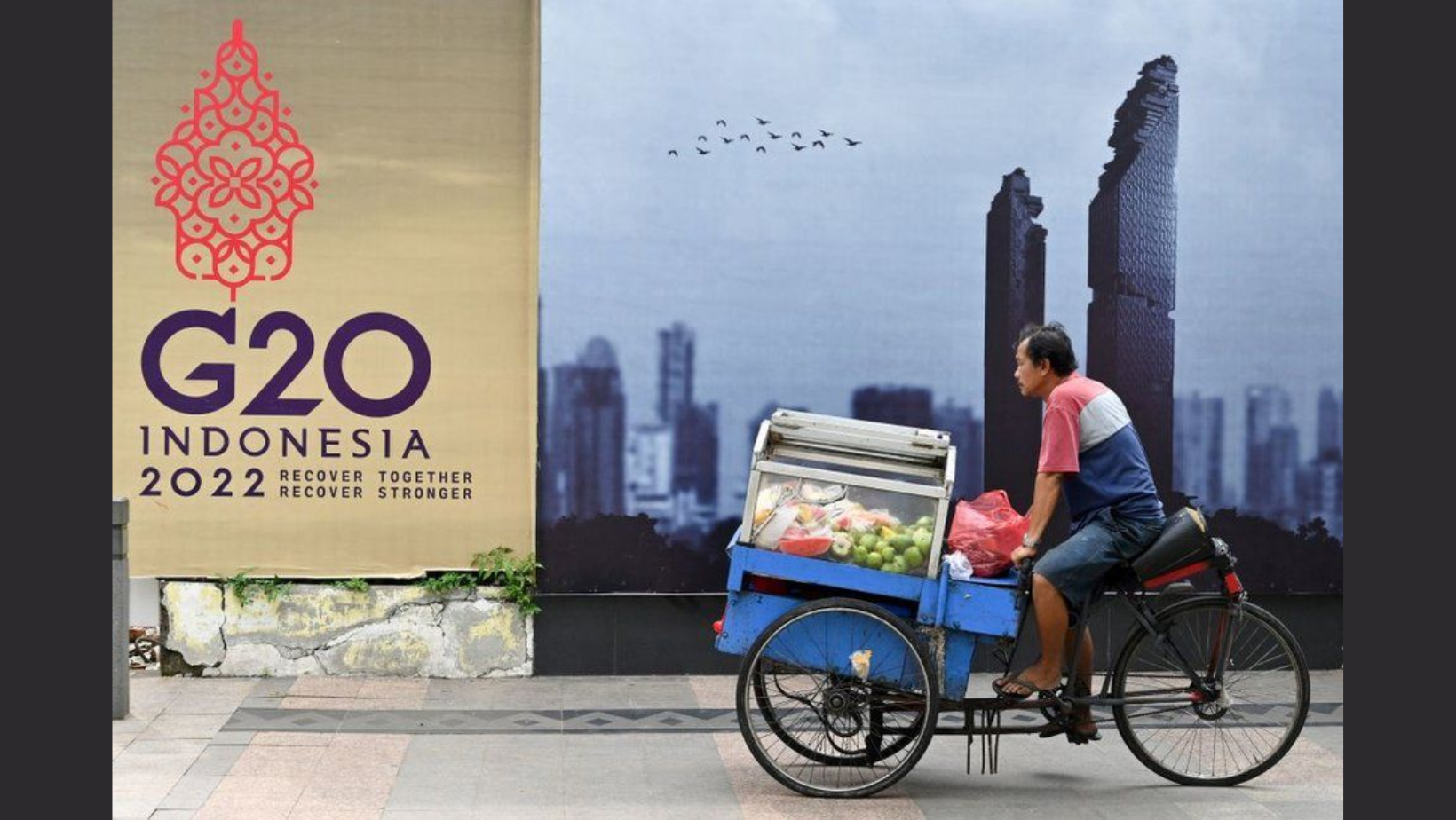
Never before has the confrontation between two global superpowers, the US and China, been as clear-cut as it is today, writes Clyde Kull ahead of the G20 Bali Summit.
The G-20 summit is overshadowed by geopolitical confrontation.
This year’s G-20 summit in Bali, 15-16 November, will take place at a special time. The forum for cooperation between the countries with the greatest impact on the world’s economy and trade is facing a post-pandemic economic and energy crisis. The Bali meeting will focus on three main areas – more equitable and fairer access to vaccines, energy, and the digital revolution. Finding the kind of cooperation that will deliver solutions will not be easy. Not least because of the US-China confrontation and the West-South polarisation that followed Russia’s aggression.
Never before has the confrontation between the two global superpowers, the US and China, been so clearly defined. The US administration has drawn red lines – putting a limit to China’s technological triumph, based on the takeover and copying of Western technology, and to China’s ambition to gain influence in the Indo-Pacific region.
The American-imposed export controls on high technology, especially on chips and semiconductors, amounted to a declaration of economic war for China. Even more painfully, China reacted to the US pledge to defend Taiwan by all means against any Chinese attack.
That is why the meeting between Presidents Biden and Xi in Bali is in itself significant, above all as a step towards dialogue. No concrete results can be expected from the meeting.
Domestically, the positions are different. President Xi has just secured absolute control of the House of Representatives, while President Biden is facing a Republican-controlled House of Representatives at home, even though he has managed to maintain a Democratic majority in the Senate.
The Global South has overwhelmingly condemned Russian aggression. However, they do not support sanctions against Russia or arms supplies to Ukraine, seeing it as a risk of escalation. Neither did Indonesia leave Russia at the door of the G-20. The calls by China, India and the Global South for negotiations between the parties and a ceasefire have also remained blurred, with no explicit emphasis on the conditions for peace talks – guaranteeing Ukraine’s sovereignty, security guarantees and territorial integrity. If this could be included in the final conclusions of the G20 meeting, it would be a major victory.
For the record, the G-20 unifying countries account for 80% of the world’s total economic output, 75% of trade and 60% of the population.
https://news.err.ee/1608788992/clyde-kull-g20-summit-overshadowed-by-geopolitical-confrontation